 Audibook

Frequently asked questions
Which voice is best for fiction?
Luna is ideal for fiction with a soft, storytelling tone, while Aria offers a warm, clear narrator style. Sage suits calm narratives, and Orion works for deep, documentary-style storytelling. Since any voice can speak any language, choose the preset that best matches your book’s specific mood and pacing requirements rather than a single 'best' option.
Can I mix voices in one book?
Yes, you can mix voices by splitting your text into parts of up to 4096 characters. Generate each part using the desired voice and join the resulting audio files. This allows you to assign different voices to different characters or sections within a single audiobook project.
Do voices change over time?
No, the voices are based on licensed recordings from LibriTTS-R and LibriVox. They do not change over time. The audio synthesis engine remains consistent, ensuring your audiobook’s voice profile stays uniform across all generated files, regardless of when they are produced.
Are the voices human-like?
The voices are synthetic and carry an inaudible watermark marking them as synthetic speech. They are based on licensed recordings but are not human. They offer clear, high-fidelity narration suitable for audiobooks, but they are distinct from real human speech and do not mimic specific celebrities.
Can I hear samples before buying?
You can generate samples using the free trial credit of $0.50, which provides about 50,000 characters valid for 7 days. Use the API to generate audio files for each voice and listen to them directly. This allows you to evaluate quality before purchasing additional character credits.
Is there a male voice for romance?
Milo offers a friendly, conversational tone suitable for romance narratives. Felix provides an energetic, promo-style voice. Atlas is neutral for news, while Orion offers a deep, documentary style. Milo is suitable for intimate, conversational romance tones, but you can test all male voices via the API.
Is there a female voice for news?
For news, Atlas is a neutral male voice designed for news delivery. Among female voices, Aria provides a clear narrator style, and Sage offers a calm, instructional tone. While Atlas is male, Aria and Sage are suitable for clear, professional news-style narration depending on your preference.
Do voices have accents?
Voices do not have fixed accents. Any voice can speak any of the 23 supported languages. If the language is not set, it defaults to English for Latin text. You can specify the language via ISO code to ensure correct pronunciation, but the voice timbre remains constant.
Can I use multiple voices for characters?
Yes, split your text into segments up to 4096 characters. Generate each segment with the specific voice assigned to a character. Then join the audio files. This workflow allows you to create distinct character voices within a single audiobook by managing the generation requests individually.
Is the audio stereo or mono?
The API returns audio files in formats like mp3, wav, opus, flac, or pcm. The specific channel configuration (stereo or mono) depends on the output format selected.
Do voices sound tired over long texts?
Voices do not degrade over long texts. Each request processes up to 4096 characters. You can split longer texts into multiple requests. The engine generates each part with consistent quality. There is no fatigue effect; each segment is synthesized independently with the same voice parameters.
Can I request a new voice?
No, there are exactly 8 preset voices: Aria, Nova, Luna, Sage, Felix, Milo, Atlas, and Orion. There is no voice cloning or custom voice design. You cannot request new voices. You must choose from the available presets for all your audiobook productions.
Are the voices customizable?
Voices are presets with fixed characteristics. You can adjust the speed between 0.25 and 4.0. You can change the language and output format. However, you cannot modify pitch, tone, or add emotion tags. The voice identity remains fixed based on the licensed recording source.
Do voices handle pauses well?
The API does not support SSML, so you cannot insert precise pause tags. Pauses are handled by punctuation in the input text. The engine interprets commas and periods to create natural breaks. For specific pause lengths, you may need to split text or adjust speed settings.
Female Voices

Female voices in our TTS API offer distinct tonal profiles suitable for various audiobook genres. Selecting the right preset ensures narrative consistency and listener engagement throughout long-form content.
Aria: Warm narrator
Aria provides a clear, warm delivery ideal for literary fiction and non-fiction. Her tone remains steady, making her suitable for dense narratives requiring sustained attention.
Nova: Bright upbeat
Nova delivers a bright, energetic performance best suited for contemporary fiction or self-help books. Her upbeat cadence keeps pacing lively for modern audiences.
Luna: Soft storytelling
Luna offers a soft, intimate voice perfect for storytelling and fantasy genres. Her gentle tone enhances immersion without overpowering the narrative structure.
Male Voices

Male voices offer distinct tonal ranges suitable for diverse audiobook genres, from promotional content to narrative storytelling. Each preset is engineered for specific auditory impacts, ensuring your audio aligns with the intended mood of the text.
Selection depends on the desired listener engagement level. While some genres benefit from high energy, others require a grounded, authoritative presence. Understanding these nuances helps maintain consistency across long-form narration.
Felix: Energetic promo
Felix delivers an energetic and dynamic tone ideal for promotional material or fast-paced narratives. His voice maintains high engagement levels, making it suitable for content requiring sustained attention.
Use Felix for segments that need to convey excitement or urgency. His clarity ensures that rapid dialogue remains intelligible without sounding rushed.
- Best for: Promotional segments, action-oriented fiction
Milo: Friendly conversational
Milo provides a friendly, conversational tone that mimics natural speech patterns. This makes him ideal for memoirs, self-help books, or contemporary fiction where a relatable narrator is preferred.
His approachable delivery helps listeners connect with the story on a personal level. He excels in first-person narratives where intimacy is key.
- Best for: Memoirs, contemporary fiction, self-help
Atlas: Neutral news
Atlas offers a neutral, news-like delivery that prioritizes clarity and objectivity. This voice is excellent for non-fiction, biographies, or educational content where the focus is on information delivery rather than emotional expression.
His consistent tone reduces listener fatigue during long reading sessions. Atlas ensures that complex data or historical accounts are presented with precision.
- Best for: Non-fiction, biographies, educational content
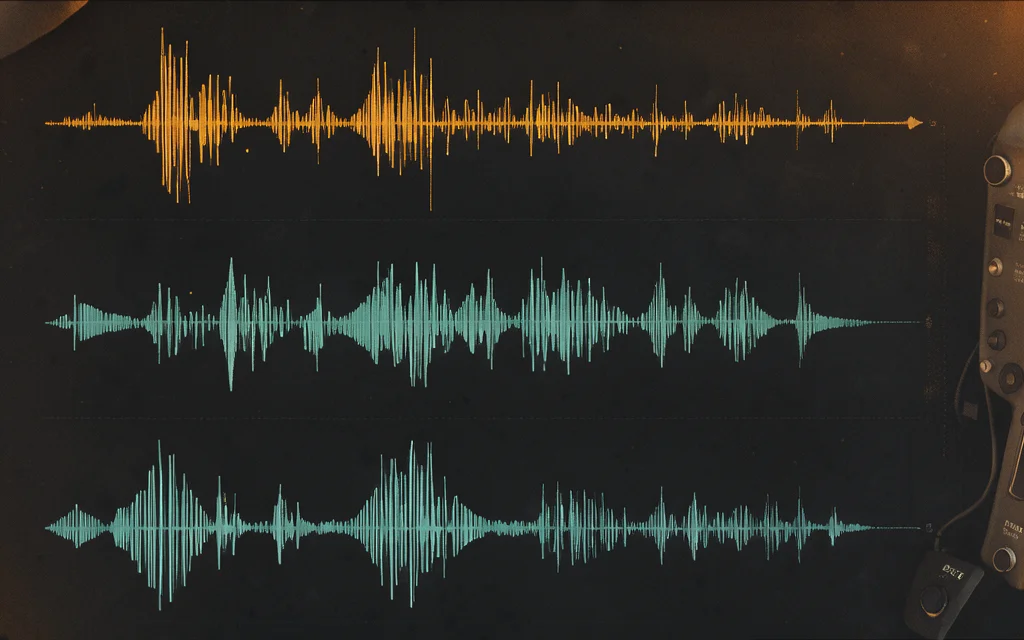
Voice Selection Criteria

Selecting the right voice requires aligning vocal characteristics with narrative genre and listener expectations. Each preset offers distinct tonal qualities suited for specific content types, ensuring the audio matches the book’s mood from the first second.
Proper selection prevents listener fatigue and maintains immersion. By matching voice traits to genre conventions, publishers can deliver a consistent experience that respects the author’s intent without requiring extensive post-production adjustments.
Genre matching
Match voice timbre to narrative style. Use Aria for warm fiction or Luna for soft storytelling. Select Atlas for neutral non-fiction or Felix for energetic promotional content. This alignment ensures the voice complements the genre’s conventions.
- Fiction: Aria or Luna
- Non-fiction: Atlas or Milo
- Promo: Felix or Nova
Listener engagement
Engagement depends on vocal clarity and pacing. Nova’s bright tone suits upbeat content, while Sage’s calm instruction works for educational material. Consistent engagement reduces drop-off rates in long-form audiobooks.
- Maintain consistent pacing
- Avoid monotone delivery
- Match energy to content
Tone consistency
Ensure uniform tone across all chapters. Using a single voice prevents jarring transitions. Verify that the chosen voice handles the entire text range effectively, from quiet moments to dramatic peaks.
- Use one voice per book
- Check tone across genres
- Avoid voice switching
Source Material

Audibook voices are synthesized from licensed recordings, ensuring high-fidelity audio without the variability of purely statistical models. Our engine leverages a curated dataset of professional-grade narration, providing a consistent baseline for commercial audiobook production.
LibriTTS-R dataset
The underlying dataset, LibriTTS-R, provides a robust foundation for our voice models. It consists of high-quality speech samples that allow the engine to capture natural prosody and rhythm, essential for long-form narration.
- High-quality speech samples
- Natural prosody capture
CC BY 4.0 license
All source materials are licensed under CC BY 4.0. This clear licensing structure allows publishers to integrate synthetic audio into commercial products without complex rights management or additional royalty checks.
LibriVox recordings
The voices are based on public-domain audiobook readings from LibriVox. This connection to traditional audiobook production ensures the synthetic output aligns with listener expectations for narration style and pacing.
Performance Metrics

Understanding performance metrics is critical for audiobook production workflows. This guide details how synthesis speed, audio clarity, and naturalness ratings impact your final product quality and delivery timelines.
Audible-quality synthetic speech requires balancing generation speed with listener engagement. The following metrics define what to expect from the Audibook API during bulk audiobook creation.
Synthesis speed
Generation typically processes at roughly real-time speed, translating to approximately 25 characters of text per second for long texts. Short phrases may take a few seconds to complete.
Requests are processed sequentially, meaning under heavy load a request might wait in a queue. For large projects, plan accordingly to avoid bottlenecks.
- Long texts: ~25 characters/second
- Short phrases: few seconds
- Sequential processing under load
Audio clarity
All generated files are delivered in high-fidelity formats including mp3, wav, opus, flac, or pcm. The clarity is consistent across all 8 voice presets, ensuring professional-grade output for self-publishing.
No background noise or artifacts are introduced during synthesis, maintaining clean audio files ready for distribution on major platforms.
Naturalness rating
Voices are based on licensed recordings from the LibriTTS-R dataset, derived from LibriVox public-domain audiobook readings. This foundation ensures a natural, human-like cadence suitable for narrative content.
Every file carries an inaudible watermark marking it as synthetic speech. This does not affect perceived naturalness but ensures clear identification of AI-generated content.
Language Compatibility

The API supports 23 languages, allowing publishers to produce multilingual audiobooks without separate voice talent hires. Each voice can speak any of these languages, ensuring consistent tonal quality across translations.
Cross-language usage requires explicit language tags for Latin-script text outside English to prevent incorrect language guessing. Without the language field, the system defaults to English for Latin scripts, which may mispronounce non-English texts.
23 languages supported
Supported languages include Arabic, Chinese, Danish, Dutch, English, Finnish, French, German, Greek, Hebrew, Hindi, Italian, Japanese, Korean, Malay, Norwegian, Polish, Portuguese, Russian, Spanish, Swahili, Swedish, and Turkish. Voices not supported are Vietnamese, Indonesian, Thai, Ukrainian, Romanian, Czech, and Bengali.
- Arabic, Chinese, Danish, Dutch, English, Finnish, French, German
- Greek, Hebrew, Hindi, Italian, Japanese, Korean, Malay
- Norwegian, Polish, Portuguese, Russian, Spanish, Swahili, Swedish, Turkish
Cross-language usage
Set the language parameter to the ISO code for accurate pronunciation. For non-English Latin-script text, explicit tagging is critical. The system guesses language from script otherwise, defaulting to English for Latin characters.
Accent variations
Each voice maintains its specific timbre and pacing style regardless of the language spoken. This ensures tonal consistency for series translations or multilingual editions. The same emotional delivery applies across all supported languages.
Technical Constraints

Text-to-speech synthesis has strict technical boundaries that affect workflow planning. Each API request accepts up to 4096 characters, requiring long manuscripts to be split programmatically. Input text includes all spaces and punctuation in this count. Failed requests incur no charge, preserving your budget during testing.
Speed can be adjusted between 0.25x and 4.0x to match narrative pacing. Selecting the appropriate audio format ensures compatibility with your distribution pipeline while managing file sizes and quality requirements.
Character limits
Each request supports a maximum of 4096 characters. Longer texts must be divided into chunks and joined afterward. Spaces and punctuation count toward the limit. Synthesis speed averages 25 characters per second for standard lengths, though queueing may occur under load.
Ensure your integration handles the splitting logic to maintain seamless audio continuity. Short phrases may take a few seconds to generate, while longer segments process closer to real-time.
- Max 4096 characters per request
- Spaces and punctuation count as characters
- Split and join for longer manuscripts
Speed adjustment
Adjust speech rate from 0.25 to 4.0 using the speed parameter. This allows fine-tuning for narration pace without re-generating audio files. Slower speeds enhance clarity for complex texts, while faster rates suit concise content.
Note that speed adjustments do not alter the underlying voice characteristics or language detection logic.
- Range: 0.25x to 4.0x
- Applies to all voices
- No re-generation needed
Format selection
Choose from mp3, wav, opus, flac, or pcm formats based on your needs. MP3 offers compressed efficiency, while WAV and FLAC provide lossless quality. PCM is raw data for custom processing pipelines.
Format choice affects file size and compatibility but not synthesis quality. Select the format that best suits your distribution channel.
- MP3: Compressed, widely supported
- WAV/FLAC: Lossless quality
- PCM: Raw audio data
- OPUS: Efficient compression

Commercial Use

Generated audio files are royalty-free, allowing publishers to integrate them directly into commercial audiobook distributions without recurring fees or per-unit charges. The synthetic nature of the output is marked by an inaudible watermark, ensuring clear identification while maintaining listener transparency.
Royalty-free audio
Audio synthesized via the API is cleared for commercial sale. There are no hidden licensing tiers or usage caps on the generated files themselves.
No attribution required
While sources are licensed under CC BY 4.0, attribution is not mandatory for end-user audiobooks. You may distribute content without crediting the specific voice or dataset.
Distribution rights
Full rights to distribute audio via standard channels, including Amazon Audiobooks, Audible, and podcast platforms. No restrictions apply to digital or physical media formats.
Quality Control

Every generated audio file carries an inaudible watermark that marks it as synthetic speech. This allows publishers to verify content origin without affecting listener experience. The watermark is embedded during synthesis and persists through format conversions.
Audio integrity is maintained by processing requests sequentially, ensuring consistent quality. Failed requests are free, so you only pay for valid outputs. This reliability supports large-scale audiobook production workflows.
Invisible watermark
Each file contains a unique synthetic marker. This helps identify AI-generated content for distribution platforms. The marker is inaudible and does not degrade audio quality.
- Marker is embedded in the audio waveform
- Persists through standard format conversions
- Does not affect listener experience
Synthetic detection
The watermark enables detection tools to identify synthetic speech. This is useful for compliance with platform guidelines. Listeners typically cannot perceive the difference from natural speech.
- Compatible with standard detection algorithms
- No audible artifacts introduced
- Transparent to end users
Audio integrity
Request metadata is kept for billing and quality tracking. Failed requests are refunded, ensuring you only pay for successful outputs. This supports accurate cost forecasting for large projects.
- Sequential processing ensures consistency
- Failed requests are free
- Metadata retained for billing
Integration Tips

Efficient integration requires strict adherence to the API's request structure and rate limits. Using the official OpenAI SDK with a adjusted base_url simplifies client implementation, allowing developers to leverage familiar authentication patterns while ensuring compatibility with the Audibook endpoint.
API key management
Maintain a single active key per account for consistent billing and usage tracking. You can issue a new key at any time, which immediately invalidates the previous one, ensuring that lost credentials cannot be exploited. Store keys in environment variables to prevent accidental exposure in version control systems.
Batch processing
For audiobook production, split input texts into segments of up to 4096 characters. Process these segments sequentially or in controlled parallel batches to respect the 60 requests per minute limit. Join the resulting audio files server-side to maintain consistent pacing and avoid gaps between chapters.
Error handling
Implement retry logic for transient network errors, but note that failed synthesis requests are free. Monitor response codes to distinguish between rate limit exceeded (429) and invalid input errors. Log request metadata for billing reconciliation, as request time and character count are retained for audit purposes.
Cost Efficiency

Cost efficiency in audiobook production relies on understanding the fixed character-based pricing model. Every character, including spaces and punctuation, counts toward the $0.01 per 1,000 characters rate. Failed requests are free, ensuring you pay only for usable audio.
Voice pricing parity
All eight voices—Aria, Nova, Luna, Sage, Felix, Milo, Atlas, and Orion—share identical pricing. Switching narrators does not increase your cost per character. This uniformity allows you to match voice tone to genre without budget penalties.
Model choice impact
The tts-1 and tts-1-hd models use the same engine and price point. The tts-1-hd designation does not incur a premium. Choose based on your quality preference, not cost, as the character count remains the sole billing metric.
Volume discounts
Pricing remains constant regardless of volume. There are no tiered discounts or minimum spend requirements. Your balance does not expire, allowing you to accumulate credits over time. Top-ups via USDT (TRC-20) are credited automatically within minutes.
- Fixed rate: $0.01 per 1,000 characters
- No minimum spend or monthly plans
- Balance never expires
- Failed requests are refunded in full

Common Mistakes

Even experienced developers make avoidable errors when integrating TTS for audiobooks. Understanding the technical constraints and language requirements prevents wasted credits and ensures consistent audio quality across your entire catalog.
These common pitfalls affect both production speed and listener experience. Addressing them upfront simplifies your workflow and reduces support overhead.
Ignoring language tags
The API guesses Latin text as English by default. If your content is in Spanish or German but uses Latin characters, omitting the language parameter results in incorrect pronunciation. Always specify the ISO code for non-English Latin-script text to ensure accurate synthesis.
Failure to set the language tag leads to unnatural cadence, especially for mixed-language texts. This is a frequent cause of poor listener engagement in multilingual productions.
- Set
languagefor all non-English Latin text. - Guessing works only for English defaults.
Exceeding char limits
Each request accepts up to 4096 characters. Exceeding this limit causes the request to fail, though failed requests are free. For longer texts, split your input into parts and join the resulting audio files.
Ignoring this constraint wastes development time debugging. Ensure your client-side logic handles chunking before sending requests to the API.
Choosing wrong format
Use mp3 for web delivery. Avoid pcm for standard playback. Reserve wav/flac for high-quality archival.
Selecting an inefficient format increases bandwidth costs and complicates player compatibility. mp3 offers the best balance of size and quality for distribution.
Listen to the 8 voices
Each sample below was generated by this API from the same sentence. Empower authors to share their stories and build lasting careers through direct reader engagement.


23 languages
Any voice speaks any of these languages.